Wilderness First Aid: How to Preserve a Knocked-Out Tooth

Erik Kulick · Feb 2, 2025
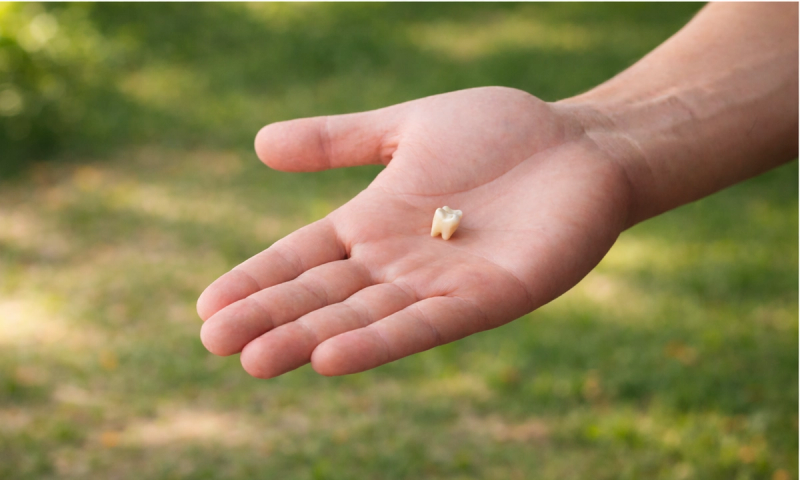
First aid for teeth may not seem as dramatic as applying a tourniquet or performing CPR, but if you find your tooth suddenly lying in the dirt, root and all, it will feel just as urgent.
Tooth avulsion — when a permanent tooth is completely knocked out — is not uncommon in outdoor pursuits like rock climbing, skiing, or mountain biking. The good news? If handled correctly and reimplanted promptly, the success rate for saving your tooth can be surprisingly high.
But what if you are in a wilderness setting with delayed access to a dentist or emergency department? How do you preserve the tooth in the meantime?
First-Aid for a Tooth
A knocked-out tooth is not unlike an amputated fingertip — its living cells must be protected until it can be reattached. The goal is to keep the root surface cells moist and viable.
Here’s how:
Step One — Rinse the Tooth Properly
- Handle the tooth carefully by the crown only (the chewing surface) and be careful not to touch the roots.
- If your tooth is dirty, use your saliva — not anyone else’s — to clean away any debris. You may feel the urge to use water to rinse it (because your saliva will likely be bloody) but overcome it since water risks killing the cells on the root surface that will help to heal and reattach the tooth. Another option for rinsing is cow’s milk if you happen to have it handy.
- Don’t rub or scrub the tooth as this risks making it less likely to survive.
Step Two — Reimplant the Tooth Immediately
If you are able, the best treatment is to gently place the tooth back into the socket as soon as possible.
- Make sure the tooth is facing the correct direction.
- Push the tooth in firmly but carefully – If it doesn’t go in easily, bite down slowly and gently using cloth, gauze, or a damp paper towel over top the tooth to stabilize it.
Teeth reimplanted within 30 minutes have the highest success rates — but even later attempts may still succeed.
Keep in mind that this first-aid applies only to permanent (adult) teeth. Do not reimplant baby teeth.
What if You Cannot Reimplant the Tooth?
If immediate reinsertion is not possible, then keep the tooth moist at all times until you reach a dentist or emergency department.
Don’t, though, wrap the tooth in paper or cloth (even if moistened) as this risks damaging the tooth’s surface, making it less likely to survive.
Instead store it in a container with your own saliva. Another option is cow’s milk. If you are able to get to a pharmacy quickly, there are over-the-counter products available but make sure that they are approved by the American Dental Association.
I’ve also seen another option recommended -- That is, you can store your tooth in your mouth between your cheek and gum, or under your tongue. This makes sense, but be very careful to not swallow or choke on it. Never do this with an unconscious patient as it greatly risks compromising their airway.
Seek Dental Care Promptly
Even if you successfully reimplant the tooth yourself, you still need evaluation by a dentist or emergency department as soon as possible. Antibiotics and follow-up care may be required.
Final Thought
Dental injuries are common in the outdoors. Knowing how to respond quickly can mean the difference between saving a tooth or losing it permanently.
If you’d like to learn more about managing dental trauma — along with other practical wilderness first aid skills — consider enrolling in one of our upcoming Wilderness First Aid certification courses.
Meet the Author

Erik Kulick, Founder & Chief Instructor
Erik is a Pennsylvania-certified EMS Instructor, Fellow of the Academy of Wilderness Medicine, and served in law enforcement. He works with individuals and groups across all skill levels -- from beginners to members of the SOF community. He's been featured in national and international media, including CNN, The Associated Press, Backpacker, and The Guardian.
To learn more about Erik, visit him on LinkedIn and be sure to follow him on Facebook, Instagram, and YouTube.