In the Age of GPS, Do Military Land Navigation Skills Still Matter?

Erik Kulick · Feb 23, 2026
When modern land navigation tools fail – or can’t be used – disciplined old-school skills can still accomplish a mission.
Major Mike Sadler, a British Army officer who served during the Second World War, lived an extraordinary life — though even the word "extraordinary" feels insufficient. Among his many accomplishments, Sadler was a true master of land navigation. And he imparted lessons the modern military would do well not to forget.
Sadler was one of the original members of the Special Air Service (SAS) – this elite special operations regiment formed in the early years of the war and later served as the model for the U.S. Army’s Delta Force, now usually referred to as CAG. His task was to guide small patrols of modified Willys Jeeps – all sporting Vickers K aircraft machine guns – across hundreds of miles of North African desert to destroy Axis bases and airfields.
Their success hinged on one factor: Sadler’s use of traditional land navigation skills.
With Sadler leading the way, the SAS could hide deep in the vast desert to the south where the Germans believed no one could possibly navigate – let alone survive. They would approach through the unforgiving desert, with its featureless landscapes, blistering sun, and constantly shifting dunes (some of which were hundreds of feet high) and then attack the Germans from behind their lines.
Sadler believed that effective navigation was a disciplined blend of science and art. The science began with careful route planning — calculating position, direction, distance, time, and even studying the night sky. The art emerged once in motion — adjusting for terrain, weather, mechanical breakdowns, and periodic strafing by a Messerschmitt. Merging these two elements required practice, preparation, and experience.
Unfortunately, three decades of increasing reliance on GPS have caused military personnel to largely forget Sadler’s lessons.
Yet Ukraine’s ongoing defense against Russian invasion has provided a sobering reminder: when GPS can be jammed or destroyed — and when even its use risks a deadly drone attack — disciplined “old school” land navigation skills remain crucial to success on the modern battlefield.
Land Navigation in the Modern Military
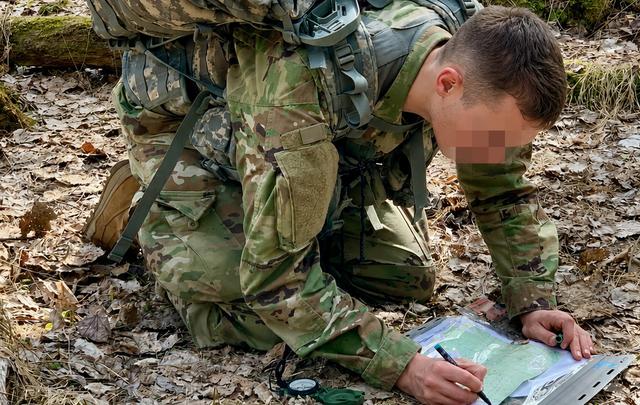
So, more than 80 years later, it’s not a surprise that the United States military still requires personnel to demonstrate competence in traditional land navigation. After all, should a team’s electronic tools fail during a mission, they are expected to still navigate with precision to accomplish it.
The real surprise is how often actual proficiency falls short of the requirement. The Department of Defense acknowledges a trend in its recruiting pool for even its most elite SOF units: service personnel have less experience, less ability, and less confidence in using a map and compass than compared to those from 20 years ago.
This doesn’t surprise us at True North. In our Mil-Nav Program, we train a diverse mix of individuals and units in land navigation from the Army, Navy, Marines, and Air Force. Many of our clients are preparing for SOF or leadership pipelines – like Special Forces, Ranger, WOCS, or IBOLC. We also regularly work with operators preparing for SMU selection in West Virginia.
In our experience, there are two primary reasons for this downward trend:
First, some younger candidates view the land navigation phase of their assessment as a temporary hurdle rather than a foundational military skill. Their objective is simple — learn, and remember, just enough to pass. Few expect they will ever need to rely solely on a map and compass operationally. It is understandable: they came of age in a world shaped by GPS, smartphones, and constant connectivity.
Second, the institution itself has gradually deprioritized traditional land navigation training. Initial instruction is often brief. Instructors frequently pass along techniques they were never fully taught themselves. Refresher training is sporadic and typically folded into pre-deployment cycles. And despite land navigation being highly perishable, there are few practice opportunities to maintain lasting competence. As one operator told me, "We get dropped at the X, we get picked up at the X, so we don't really use the skill."
Meanwhile, the modern service member must master an expanding list of technical skills, often within constrained time and training budgets. Something inevitably must yield – Usually, it is foundational map-and-compass proficiency.
Fortunately, we are consistently impressed by the mindset of those who seek out our training. Whether an 18X candidate or an experienced operator with multiple deployments, our clients tend to share common traits — humility, openness to instruction, and an eagerness to refine any skill that will make them a more proficient warrior. They understand that while land navigation is technically simple to learn, it is exceptionally difficult to master. And so they train accordingly.
At True North, we emphasize the fundamentals of traditional military land navigation — its disciplined blend of science and art from our Baseline Military Land Navigation (BMLN) for beginners to our Tier One Navigation Development (TONDEV) designed for SOF operators preparing for SMU selection in West Virginia. Our objective is not merely to help candidates pass selection, but to develop confident navigators capable of leading under uncertainty. Because if electronic systems fail, or can't be used, someone must still have the ability to determine position, direction, distance, and time — and guide the team forward.
Old School Land Nav Skills Still Vital
Sadler refused to rely on hunches, even when large portions of his maps were blank — marked only by the occasional dotted line labeled “suspected camel track.” At night, he took the time to identify reliable stars before moving his patrol. During the day, he dead-reckoned deliberately, calculating position by tracking direction, distance, and time across featureless terrain. That discipline enabled him to lead his men more than 400 miles through the Libyan desert to raid the Wadi Tamet airbase — and then guide them safely back into the dunes.
Remarkably, Sadler described his own ability as only marginal.
History knows otherwise.
His legacy reminds us that land navigation has never been about gadgets. It has always been about judgment — and the quiet confidence that comes from earned competence.
Technology will continue to evolve – on both sides. Drones will proliferate on the modern battlefield.
So, someone must have the judgment and confidence to lead.
That responsibility has not changed in 80 years.
And it never will.
Meet the Author

Erik Kulick, Founder & Chief Instructor
Erik is a Pennsylvania-certified EMS Instructor, Fellow of the Academy of Wilderness Medicine, and served in law enforcement. He works with individuals and groups across all skill levels -- from beginners to members of the SOF community. He's been featured in national and international media, including CNN, The Associated Press, Backpacker, and The Guardian.
To learn more about Erik, visit him on LinkedIn and be sure to follow him on Facebook, Instagram, and YouTube.