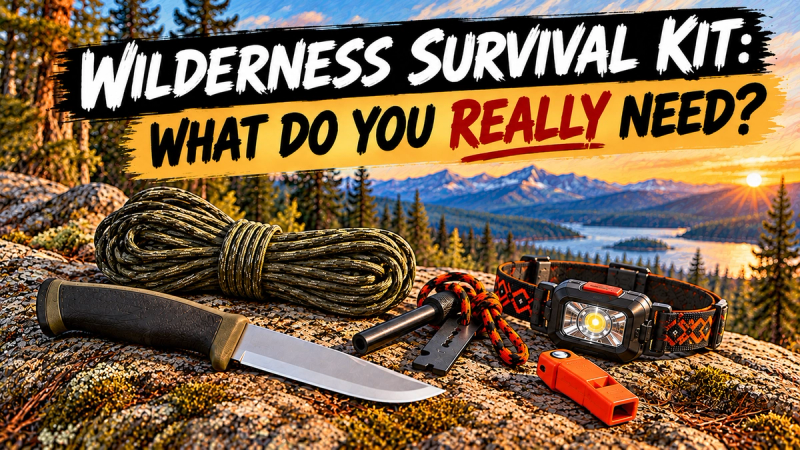
Wilderness Survival Kit: What Do You Really Need

Erik Kulick · Oct 8, 2026
I take a practical look at survival gear — from the “just a knife” approach to the traditional “Ten Essentials” — and share the core items I recommend carrying into the outdoors.
When things go sideways in the outdoors, having the right gear can make all the difference.
But, what gear should you carry in your wilderness survival kit?
On one hand … Some folks will tell you all you really need is a knife.
On the other hand … Others will tell you to carry the “Ten Essentials.”
I think that the answer lies somewhere in between.
If you prefer to watch rather than read, just scroll to the bottom of this page where you’ll find my companion video.
JUST A KNIFE?
Let me start by addressing a common misconception.
Too many believe that all you really need is a good knife. With it, you can improvise everything else — build a shelter, make a fire, and so on.
Yes, I know, adaptability and improvisation are hallmarks of a survivor; you obviously can’t carry every piece of gear that you might need for every possible situation; and there are certainly examples of folks who survived hellacious situations with little or no gear.
But here’s the flaw in that reasoning:
Just because something can be improvised doesn’t mean you should plan on having to improvise it.
If you don’t carry at least a few carefully selected items, you risk seriously handicapping yourself in an emergency.
After all, there are a lot more examples of folks who didn’t make it home because they weren’t prepared.
Let’s use fire-craft as an example:
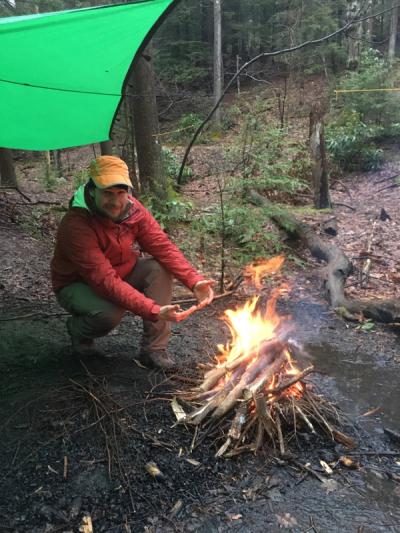
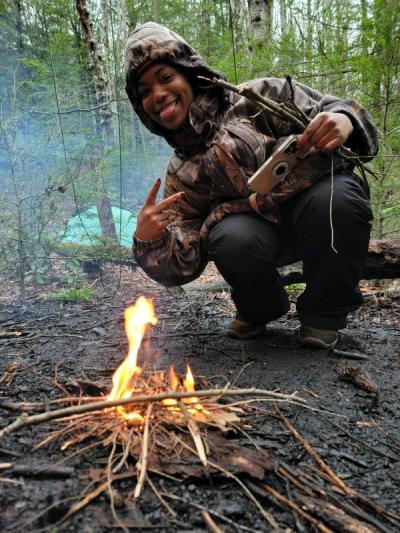
Technically, with just a knife, you could find and prepare the materials you need to start a primitive fire – say, a fire by friction with a bow-drill.
But I would argue that a primitive fire is not a realistic solution in an actual emergency.
It may look easy and fast on television, but in the real world, even someone experienced in making primitive fires may spend considerable energy and time finding suitable materials, preparing them, then working to produce the needed coal.
And consider … energy and time are two resources that you’ll likely have in limited supply in an emergency.
And if you happen to have a broken arm?
Good luck using that bow drill you’ve been practicing.
That doesn’t mean primitive skills are useless. Far from it.
But, in an emergency, improvisation should be your supplemental or backup plan, not your starting point.
That’s why, at True North, we teach a more modern approach to survival, similar to what is taught in US military survival schools.
That means carrying at least a few carefully selected pieces of gear – even on a routine “day hike” – and having the skills and knowledge to use them under stress to meet your survival priorities.
TEN ESSENTIALS?
At the same, I am not sure that I subscribe to the “10 Essentials.”
These are items commonly recommended by park rangers, search-and-rescue organizations, and outdoor groups as those items you should have in a survival kit.
The concept has been around for decades, and while there isn’t one universally accepted list, most versions include the following:
- Map & Compass
- Light Source
- Sun protection
- First Aid Kit
- Knife
- Firestarter
- Emergency shelter
- Extra food
- Extra water
- Extra clothing
Look, I generally think it’s good advice.
And I agree with some of those suggested items.
But, as for the others, “essential” is a matter of perspective in my opinion.
I think that you should define it according to a mix of factors:
- Your chosen outdoor activity;
- The season in which you conduct it.
- Most importantly, your skill level.
For example, when I kayak off-shore, a hat, sunglasses, and sunscreen are essential items to pack. But on a wooded trail hike, not so much.
And if you don’t know how to use an item, is it really essential?
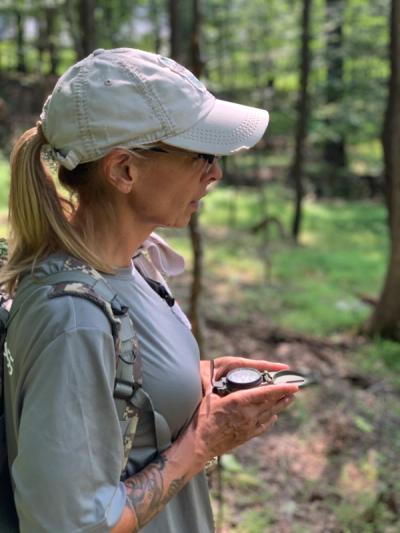
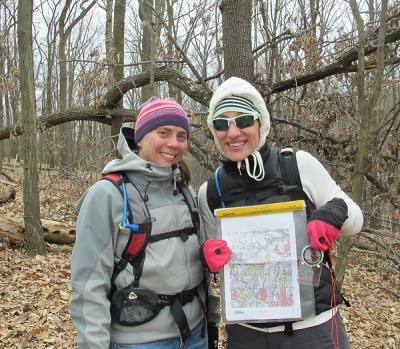
For example, I pack a map and compass because I know how to use both … Heck, I teach military personnel how to use them.
But what if I didn’t know how to use either?
What use would they be?
So, would they really be essential?
Besides, you can survive even if you are lost.
CORE ITEMS
I don’t recommend survival gear based on an arbitrary number.
Instead, I recommend gear based on those survival priorities that I mentioned in my video, Survival Situation? What Do You Do First?
I also recommend it based on the season, the outdoor activity, and skill level.
Plus, whenever possible, I favor gear that can serve more than one purpose.
I also believe that the best survival kit is the one that you make yourself. It’s not pulled off a store shelf or purchased online.
So, for me, that starts with seven core items, along with several supplemental items worth considering.
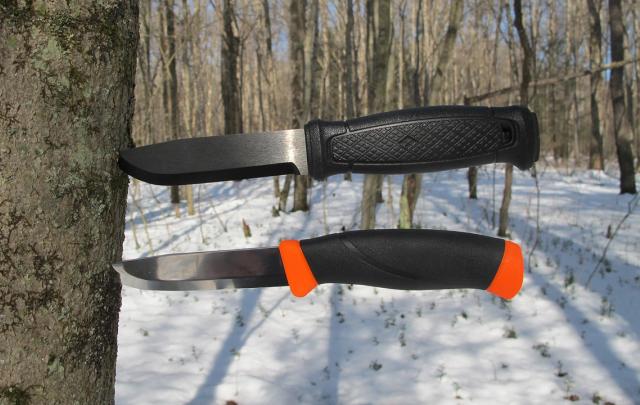
1. Knife
Every survival kit should have a full-tang knife.
It is one of the most versatile tools you can carry.
And I’m not talking about simply cutting things.
A full-tang knife can be used to cut, carve, split, pry, dig, chop, and pound — helping you to build a shelter, process firewood, collect water, and address any number of other survival needs.
2. Sheathing
You should also include a minimum of 100 square feet of sheathing in your kit.
Personally, I like inexpensive plastic 2-mil drop cloth from the local hardware store.
It’s lightweight, compact, inexpensive, windproof, waterproof, and extremely versatile.
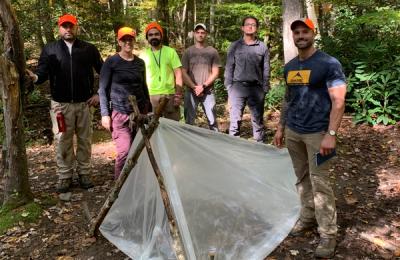
First and foremost, you can use it to build a shelter. You can also collect water, move an injured person, and more.
3. Cordage
Definitely include of cordage. I recommend at least 50 feet. I prefer paracord.
Combine cordage with your sheathing, and you already have the basic materials needed to construct an effective emergency shelter, and so much more.
4. Fire Starter
Of course, a fire starter.
At a minimum, pack a ferrocerium rod.
Better yet, carry a lighter too or some other backup method.
When it comes to something as important as fire, I believe in redundancy.
You may have heard the expression, “One is none; two is one.”
In fact, I don’t really think of this as simply a fire starter.
Instead, I carry a small fire kit within my larger survival kit that also contains various types of tinder and cheats.
5. Signal Device
One thing that people forget is a signaling device.
I believe that a survivor plays an active role in their rescue.
That means being able to communicate that they need help and to identify their location.
At a minimum, carry a whistle.
It weighs almost nothing, takes up very little space, and allows you to produce a much louder signal for far longer than you could by shouting.
6. Light Source
Definitely include a light source.
Don’t be one of those people who relies on a mobile phone for light.
Carry a dedicated flashlight or headlamp.
And, again, consider redundancy — even something as simple as a chem-light gives you another source of illumination if your primary light fails.
7. Water Filter
Definitely a water tool of some sort.
Carry a reliable means of treating water.
At a minimum pack a filter type.
But since potable water ideally means filtering and purifying — include some chlorine tablets.
That gives you another layer of redundancy for one of your most important survival needs.
8. Bag
And here’s what’s great: All seven of these items can fit into a relatively small bag that you can toss into your back whenever you head outdoors.
SUPPLEMENTAL ITEMS
Beyond those seven core items, there are plenty of other useful pieces of gear worth considering adding to your survival kit.
Some items I commonly pack include:
- Multitool — gives you pliers, screwdrivers, cutting tools, and other useful capabilities.
- Folding saw — makes processing larger pieces of wood considerably easier.
- Duct tape — useful for repairs, improvisation, first aid, and countless other tasks.
- Water container — like a collapsible one that gives you a way to collect water.
- Personal Locator Beacon — because sometimes the most valuable piece of survival equipment is the one that helps rescuers find you even in the most remote areas.
Of course, there are many others pieces of gear to consider but these should help get you started.
FIRST-AID KIT
You may have noticed that I did not include a first-aid kit as a component of a survival kit.
That's intentional.
Obviously, I believe that having the tools and supplies needed to provide medical care in the outdoors is vitally important.
But I don't really consider a first-aid kit to be simply another item within your survival kit. I consider it to be a separate, but equally important, resource that you should carry alongside it.
So, it justifies its own focus.
Which like a survival kit, should be dictated by the outdoor activity, the expected conditions, and the training of the provider.
CONCLUSION
So, what should you carry in your survival kit?
I don’t think there’s a magic number — or a universal list that works for everyone.
But you do need gear.
And what you decide to carry should be based on several factors — like your survival priorities, your outdoor activity, the conditions you expect to encounter, and, most definitely, your own skill level.
Start with seven core items.
Supplement them based on your needs.
And most importantly, learn how to use what you carry. When things go sideways, simply having gear isn’t enough … You need the skills, the knowledge, and the judgment to put it all together to work.
So, consider taking one of our Wilderness Survival courses.
Because if you ever find yourself stranded in the woods, you’ll be glad you took the time to prepare … and so will anyone who’s counting on you.
Meet the Author

Erik Kulick, Founder & Chief Instructor
Erik is a Pennsylvania-certified EMS Instructor, Fellow of the Academy of Wilderness Medicine, and served in law enforcement. He works with individuals and groups across all skill levels -- from beginners to members of the SOF community. He's been featured in national and international media, including CNN, The Associated Press, Backpacker, and The Guardian.
To learn more about Erik, visit him on LinkedIn and be sure to follow him on Facebook, Instagram, and YouTube.