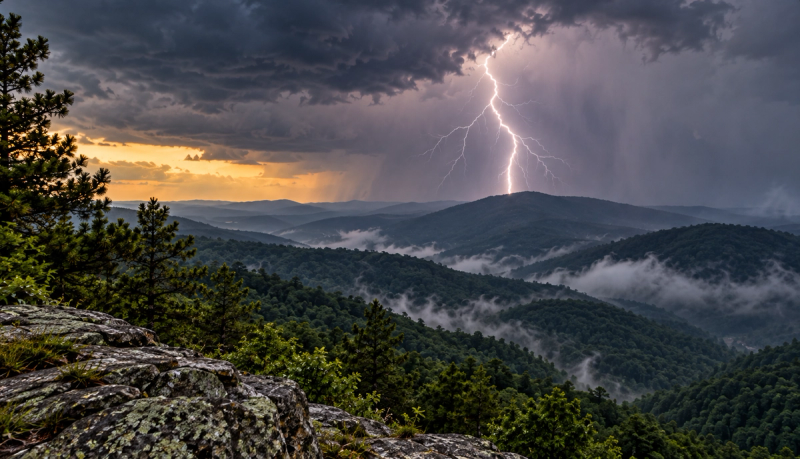
Lightning Safety: Not All Shelter is Safe Shelter

Erik Kulick · Sep 26, 2026
When lightning threatens, not every shelter is a safe shelter. Learn how to recognize the danger, reduce your risk when caught outdoors, and make better decisions when conditions suddenly change.
If you're hiking and a storm suddenly rolls in, seeking shelter seems like the obvious thing to do.
And usually, that's good advice.
But when that storm includes lightning, the kind of shelter matters. Not everything that looks like shelter is actually safe shelter.
A recent tragedy in Utah provides a sobering example.
A group of hikers was near the summit of Mount Timpanogos when a thunderstorm moved over the mountain. Several sought refuge inside a small metal structure known locally as the “Tin Shack.”
Lightning struck the structure.
A 19-year-old hiker was killed, and nine other people were injured.
It's easy to look at an incident like this afterward and say what someone should have done.
That's not particularly helpful.
The better question is: What can the rest of us learn from it?
Because this wasn't an isolated incident. Every year, outdoor enthusiasts find themselves caught outside when thunderstorms develop — sometimes with tragic consequences.
Shelter From What?
One of the things we emphasize at True North is that good decision-making starts with correctly identifying the problem you're trying to solve.
Take shelter, for example.
In a wilderness survival situation, we typically think about shelter as a way to protect ourselves from exposure — rain, wind, snow, cold, or excessive heat.
But a thunderstorm presents another hazard: lightning. And a structure — like a picnic pavilion, a tent, or a rocky overhang — that does a perfectly good job at protecting you from rain may do very little to protect you from electricity.
That's an important distinction.
Because when lightning is the threat, a roof over your head doesn't necessarily mean you're safe.
So What Is Safe?
When lightning threatens, your best options are a substantial enclosed building or an enclosed, hard-topped vehicle.
That's why the advice you've probably heard since childhood — “When thunder roars, go indoors” — is actually pretty good advice.
But here's where things become more complicated for those traveling in the backcountry: There usually is no “indoors.”
Your vehicle might be miles away. There may be no substantial buildings anywhere nearby. So, as it starts to downpour and the thunder booms, that little trail shelter a few hundred yards ahead may look awfully inviting.
That's where judgment becomes important.
Prevention is the Best Medicine
Of course, your best lightning strategy is avoiding the situation in the first place.
Before heading out, check the forecast. And continue paying attention to changing conditions while you're outside.
Review you route — check to see if it’ll will take you onto summits, ridgelines, or other exposed terrain.
Know your region. In some parts of the country — particularly in mountainous areas — thunderstorms can develop with surprising regularity at certain times of the day. Know the local weather patterns and plan your route — and your timing — accordingly.
And don't succumb to “summit fever.” If conditions are deteriorating, turn around. Your intended goal will still be there another day.
Caught Outside: Reduce Your Risk
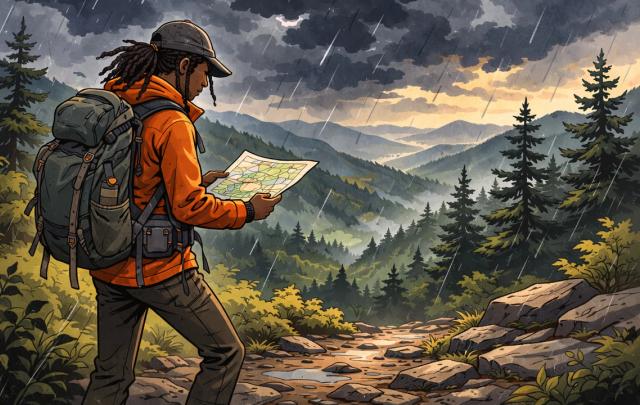
If you're already on the trail when a thunderstorm develops your choices may be limited but you have options.
When you hear thunder – no matter how far off it may be – take it seriously. You're already close enough to the storm to be struck by lightning. Don't wait for heavy rain or for lightning to strike nearby before you take action.
If a substantial enclosed building or hard-topped vehicle is reasonably accessible, get there.
Then remain inside for at least 30 minutes after the last sound of thunder.
But, of course, in the backcountry, safe shelter may be miles away — or simply not exist.
So your goal is simply to reduce your exposure.
Don't continue toward a summit or remain on a ridgeline hoping the storm will pass.
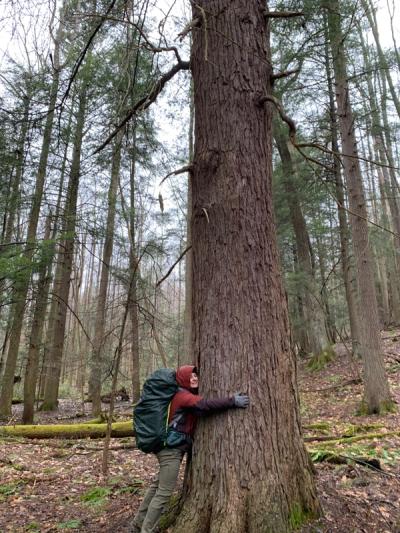
Get off high and exposed terrain. Descend toward lower ground if you can do so safely. Avoid isolated tall trees, bodies of water, rocky overhangs, and open-sided shelters. In a forest, being among a group of shorter, relatively uniform trees is generally preferable to standing near an isolated tall tree or at the edge of an open area.
Stay away from water and conductive objects such as metal fences. Avoid shallow caves and rocky overhangs, which may seem like obvious shelter from a storm but don't provide the protection of a substantial building.
And don't lie flat on the ground — doing so increases your contact with the ground and your exposure to electrical current from a nearby strike.
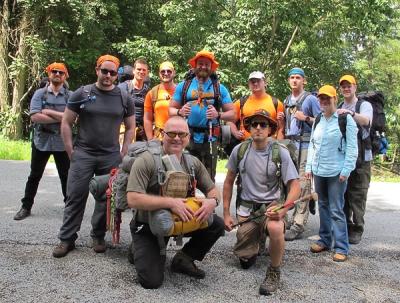
If you're traveling as a group, spreading out can also reduce the chance that a single strike or ground current event injures everyone at once.
None of these measures makes you safe from lightning.
They are simply steps to reduce your risk when the safest options simply aren't available.
And that's an important point because there really is no completely safe place outdoors during a thunderstorm.
The Bigger Lesson
To me, here’s the most useful lesson from the tragedy on Mount Timpanogos: Wilderness emergencies rarely present themselves as neat problems with obvious answers.
They require you to assess what's happening, identify the actual hazard, understand your options, and make the best decision you can under the circumstances.
That's why we spend so much time at True North providing our clients with the skills and knowledge to make the best decisions possible. For example, in our Wilderness First Aid classes we teach how to treat a patient following a lightning strike.
But we'd much rather you never have to use those skills.
And that's really the lesson here.
Check the weather. Know the conditions. Recognize the threat early. And when circumstances change, be willing to change your plan.
Because in the backcountry, good judgment isn't about always knowing the perfect answer.
It's about recognizing when the answer you started with is no longer the right one.
Meet the Author

Erik Kulick, Founder & Chief Instructor
Erik is a Pennsylvania-certified EMS Instructor, Fellow of the Academy of Wilderness Medicine, and served in law enforcement. He works with individuals and groups across all skill levels -- from beginners to members of the SOF community. He's been featured in national and international media, including CNN, The Associated Press, Backpacker, and The Guardian.
To learn more about Erik, visit him on LinkedIn and be sure to follow him on Facebook, Instagram, and YouTube.