Military Land Navigation: 5 Keys to Success at Selection

Erik Kulick · Nov 2, 2026
Whether you're preparing for SFAS, RASP, BOLC, WOCS, or even an SMU, here are the five keys to successfully passing the land navigation phase of any military assessment program.
There’s a paradox in today's military.
Thanks to GPS and modern technology, traditional land navigation skills are rarely used.
Yet these same “old school” skills remain a critical component of many military selection programs – where the stakes are high.
And with limited opportunities to learn and practice these highly perishable skills, candidates often struggle – many fail.
So, here are five keys to success at selection — and how you can put them to work as you prepare.
If you prefer to watch rather than read, just scroll to the bottom of this page where you’ll find my companion video.
My Perspective
Over the years, I’ve worked with a diverse mix of service members.
From those preparing for selection at OCS, ROTC, and Warrant Officer programs to candidates preparing for SFAS, RASP, GRC, and even special mission units — As well as experienced members of the special operations community.
Different backgrounds.
Different objectives.
One common goal: They all must demonstrate proficiency in traditional map and compass skills.
So I've had plenty of opportunity to observe what separates successful navigators from those who struggle.
Five Keys to Success
Key #1: Start Preparing ASAP
The first key to success in land navigation is to give yourself plenty of time to prepare.
My advice is to begin at least six months – ideally one year – before your rally date.
One of the most common mistakes I've seen is candidates waiting too long to begin.
Some come to me just 4–6 weeks before selection, having focused on other requirements, particularly physical fitness.
Others deliberately wait, believing that learning closer to selection will help them remember more and perform better.
I understand both reasons, but here's the problem.
While land navigation is conceptually easy, it's technically difficult. Understanding how to do something is very different from developing the proficiency to do it accurately and consistently, especially under stress – like fatigue, heavy ruck, and harsh weather.
And that proficiency takes time to develop.
The best place to start – if you have zero training, or it's been a while since you've last trained – is in a course from an experienced instructor.
Books and online resources are excellent supplements, but there's no substitute for initial hands-on instruction and real-time feedback.
That's exactly the kind of training we provide in our Mil-Nav Program at True North.
Consider it an investment in your future — especially when you think about what's at stake during selection.
Key #2: Practice
The second key to success is the same as that old joke, “How do you get to Carnegie Hall?” Answer: Practice. Practice. Practice.
At the end of every course I teach, I tell my clients that just because they’ve completed the class doesn't mean they’ve finished their training.
They’ve only just begun … They need to go home and keep practicing.
Make the most of your time by getting in lots of study at home and reps in the field.
You’ll improve from what you did right – and you’ll improve by learning from what you did wrong.
Over time, ongoing practice will help you to develop your judgment and route-planning skills.
Some guys tell me they have nowhere to practice on post.
But there are alternatives.
As a start, print a map, even if it’s just your local park, and practice navigating between obvious features, like a road intersection, structure, or hilltop.
Even better, find your local orienteering club.
Many maintain permanent courses that are open to the public for practice, some of which are quite good.
Register for one of their events so that you can hone your skills.
Do you want to then test them under some of the same stressors you’ll face at selection?
Then sign up for an adventure race — It has a similar framework as orienteering but involves multiple sports over longer distances that will definitely challenge your physical endurance and navigation proficiency.
Make land navigation a regular part of your training routine, just as you would physical fitness, and carve out the necessary time.
For example, I spend a lot of time with my wife each year in Virginia Beach, so I know firsthand that there are no good places in, or around, the city, to practice land navigation. But I've had Little Creek clients who, on their day off, get up at zero-dark-thirty, drive three hours to a state park near Quantico, practice all day on an orienteering checkpoint course there, then drive another three hours back home. Then repeat on another day.
That's a commitment to practice.
Key #3: Keep an Open Mind
Another key to success is to keep an open mind.
Know that you don't know.
I've noticed that some candidates can be resistant to instruction.
Some have already failed the land navigation phase of selection and are preparing for another attempt, so, understandably, they want to correct whatever went wrong the first time.
Others are simply accustomed to doing things the way they were originally taught — methods they've practiced and relied upon for years.
I appreciate both perspectives.
The problem is that successful land navigation requires several skills working together.
And sometimes, the weakness holding you back isn't the one you think it is.
So, seek out experienced instructors, listen to feedback, and be open to different approaches.
Some of my best clients have been highly experienced operators who still arrive willing to challenge their own assumptions.
Key #4: Develop Disciplined Habits
Develop good navigation habits — and be disciplined about following them.
Good navigation requires doing little things consistently, even when they seem unnecessary.
And the more demanding the conditions, the more important disciplined habits become.
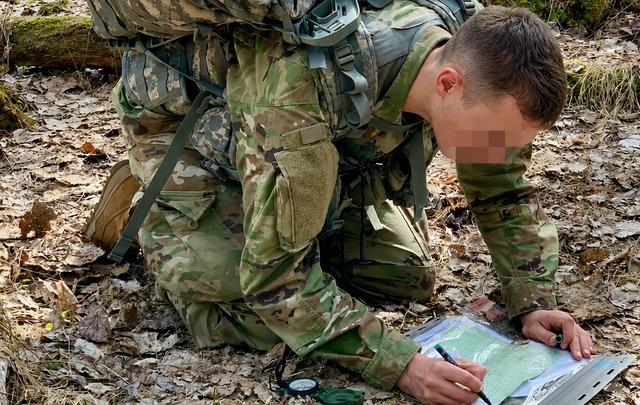
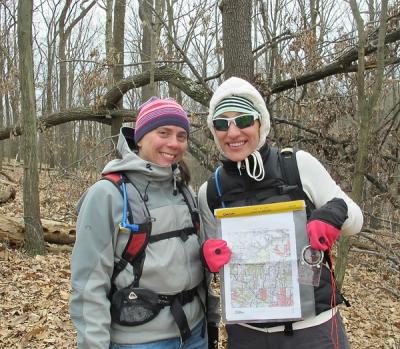
For example, one habit I constantly emphasize to my clients is the importance of regularly "orienting the map." By this, I mean briefly stopping, opening up your map, using your compass to orient it to north, then comparing what you see on the map with those natural and human-made features that you see around you. I recommend doing this at the start of a movement, at the end, and regularly along the way. It's a simple habit that helps to confirm your position, maintain positional awareness, and avoid costly mistakes.
Now, this requires a little added time and effort — especially when the clock is ticking; you're exhausted; and you “think” that you know where you are.
So, can you skip this step and most likely still find your checkpoint?
Absolutely.
And that's precisely the problem.
The more often you get away with cutting corners, the more likely you’ll give up good habits altogether.
Until one day, a small mistake becomes a big problem.
Discipline isn't about doing the right things when it’s convenient – It's about doing them even when it’s not.
So, whether it’s about plotting coordinates, managing your gear, searching for checkpoints, or taking notes, develop good habits and stick to them.
Key #5: Train Under Realistic Conditions
Once you've developed a solid foundation, gradually make your training more realistic.
Don't assume that just because you're technically proficient, you're ready for selection.
There's a big difference between navigating under ideal conditions and navigating under the demands of selection.
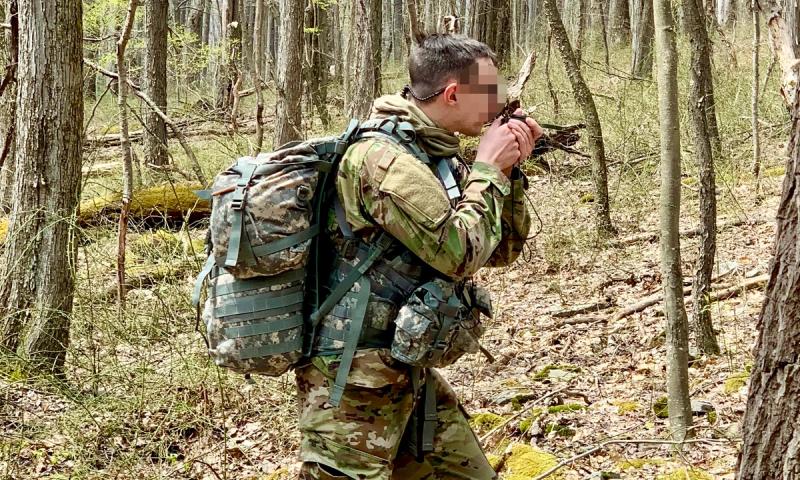
You’ll be carrying a heavy ruck over mixed terrain, through mixed vegetation, for long distances, in all types of weather.
On top of that, you’ll be sleep-deprived, hungry, dehydrated, and dealing with painful blisters.
All these stressors take a toll — not just on your body, but on your ability to make good decisions – so prepare to prevail.
Progressively increase your distances, carry a loaded ruck, wear the boots that you’ll wear at selection, carry a rubber duck or a 10-pound sledge-hammer, and spend less time in the gym and more time moving cross-country.
Try to practice under conditions that resemble the demands of your particular selection as closely as practical.
And practice your navigation skills and good habits until they become second nature, even when you’re tired and under pressure.
Remember, the objective isn't to make you suffer.
It's to develop the physical conditioning, navigation skills, and good habits necessary to make sound decisions even when you're suffering.
The Checkpoint Isn’t the Point
Despite the paradox that I mentioned at the start of this video, land navigation remains an important part of many military selection programs for good reason.
Land navigation tests more than your ability to find checkpoints. It reveals your character, discipline, and ability to make good decisions — under stress.
So, to succeed, you need to be proficient in this skill.
Proficiency comes from good training in the fundamentals, followed by consistent ongoing practice.
And that proficiency will give you confidence to make good decisions — especially when you're tired, hurting, and under pressure.
But here's really the heart of my message: The checkpoint is not the point.
It's the opportunity to show that you have what it takes to earn your place in the unit that you're working so hard to join.
That’s why you prepare to prevail.
Meet the Author

Erik Kulick, Founder & Chief Instructor
Erik is a Pennsylvania-certified EMS Instructor, Fellow of the Academy of Wilderness Medicine, and served in law enforcement. He works with individuals and groups across all skill levels -- from beginners to members of the SOF community. He's been featured in national and international media, including CNN, The Associated Press, Backpacker, and The Guardian.
To learn more about Erik, visit him on LinkedIn and be sure to follow him on Facebook, Instagram, and YouTube.